CHALLENGE HER2-MUTATED NSCLC WITH HYRNUO

A TKI for patients with locally advanced or metastatic non-squamous non-small cell lung cancer (NSCLC) whose tumors have HER2* TKD-activating mutations, and who have received prior systemic therapy1

This indication is approved under accelerated approval based on objective response rate (ORR) and duration of response (DoR). Continued approval for this indication may be contingent upon verification and description of clinical benefit in a confirmatory trial.


*HER2 is sometimes referred to as ERBB2 (erb-b2 receptor tyrosine kinase 2).

ERBB2 = erythroblastic oncogene B; HER2 = human epidermal growth factor 2; TKD = tyrosine kinase domain; TKI = tyrosine kinase inhibitor.

See resources

HYRNUO is a kinase inhibitor indicated for the treatment of adult patients with advanced non-small cell lung cancer (NSCLC) whose tumors have HER2 (ERBB2) tyrosine kinase domain (TKD) activating mutations, as detected by an FDA-approved test, and who have received a prior systemic therapy.

This indication is approved under accelerated approval based on objective response rate (ORR) and duration of response (DoR). Continued approval for this indication may be contingent upon verification and description of clinical benefit in a confirmatory trial.

HYRNUO DEMONSTRATED A COMPELLING AND DURABLE RESPONSE

PRETREATED PATIENTS WHO WERE NAIVE TO HER2-TARGETED THERAPY

71% in a circle

71% OF PATIENTS TREATED WITH HYRNUO ACHIEVED AN OBJECTIVE RESPONSE1†‡

(95% CI: 59, 82; N=70)

CR: 2.9% (n=2), PR: 69% (n=48)

Calendar icon with text of 9.2 months

MEDIAN DoR OF HYRNUO WAS 9.2 MONTHS1†§

(95% CI: 6.3, 15.0; N=50)

DoR ≥6 months: 54%

DoR ≥12 months: 18%

PRETREATED PATIENTS WHO RECEIVED PRIOR HER2-TARGETING ADCs

38% in a circle

38% OF PATIENTS TREATED WITH HYRNUO ACHIEVED AN OBJECTIVE RESPONSE1†‡

(95% CI: 25, 53; N=52)
CR: 6% (n=3), PR: 33% (n=17)

Calendar icon with text of 7 months

MEDIAN DoR OF HYRNUO WAS 7 MONTHS1†§

(95% CI: 5.6, NE; N=20)

DoR ≥6 months: 60%

DoR ≥12 months: 10%

Data cutoff: March 2025.

In SOHO-01, patients received prior systemic therapy and were either naive to HER2-targeted therapy (Group D, N=70) or received prior HER2-targeting ADCs (Group E, N=52)1

Major efficacy outcomes were confirmed ORR and DoR as assessed by BICR using RECIST v1.1.1  

ORR (95% CI) calculated using the Clopper-Pearson method.1

§Kaplan-Meier estimate.1

Observed proportion of responding patients with DoR beyond landmark time.1

HYRNUO WAS EVALUATED IN A MULTICOHORT STUDY OF PATIENTS WITH HER2-MUTATED NSCLC1

SOHO-01 is a global, open-label, single-arm, multicohort Phase I/II trial, studying HYRNUO in patients with HER2 (ERBB2) TKD-activating mutations in locally advanced or metastatic non-squamous NSCLC who have had prior systemic treatment1,2

  • Efficacy population included patients naive to HER2-targeting therapy (N=70; Group D) and those exposed to HER2-targeting ADCs (N=52; Group E)
  • Safety population evaluated in 136 patients who had received prior systemic therapy

    Select Inclusion Criteria1,2

    • Locally advanced or metastatic NSCLC with HER2 activating
mutations
    • ≥18 years
    • ECOG PS 0 or 1
    • Prior systemic therapy
    • Patients with treated, stable, and asymptomatic brain metastases were eligible

    Select Exclusion Criteria1

    • Patients with symptomatic CNS metastasis, clinically significant
cardiac disease, and history of steroid-dependent interstitial lung disease (ILD)/pneumonitis

    HYRNUO 20 mg BID1

    • Efficacy Population
      • Patients with locally advanced or metastatic non-squamous NSCLC with HER2 TKD-activating mutations who had received prior systemic therapy:
        • Naive to HER2-targeted therapy (N=70; Group D)
        • Including HER2-targeting ADCs (N=52; Group E)
    • Safety Population
      • Safety was evaluated in 136 patients with locally advanced or metastatic NSCLC harboring HER2-activating mutations who had received prior systemic therapy

    Endpoints2

    • Primary:
      • Overall response rate (ORR)
      • Safety profile
    • Secondary:
      • Duration of response (DoR)

    Pretreated patients who were naive to HER2-targeted therapy (Group D, N=70)1

    • 67% of patients were female
    • 69% were never-smokers, 29% former-smokers, and 2.9% current smokers
    • The median age was 59 years (range 29 to 77)
    • 61% of patients had ECOG PS 1 and 39% had ECOG PS 0
    • 91% of patients had Stage IV NSCLC
    • 20% of patients had stable brain metastases
    • The median number of prior therapies was 1 (range 1 to 8)

    Pretreated patients who received prior HER2-targeting ADCs (Group E, N=52)1

    • 67% were female
    • 65% were never-smokers and 35% former-smokers
    • The median age was 65 years (range 35 to 91)
    • 71% of patients had ECOG PS 1 and 29% had ECOG PS 0
    • 85% of patients had Stage IV NSCLC
    • 29% of patients had stable brain metastases
    • The median number of prior therapies was 2 (range 1 to 8)

    ADVERSE REACTIONS WERE ASSESSED IN A POOLED POPULATION OF 268 PATIENTS

    The pooled safety population reflects exposure to HYRNUO at 20 mg orally twice daily in 268 patients with locally advanced or metastatic NSCLC with HER2 and/or other mutations from the SOHO-01 study

    Of the 268 patients who received 20 mg of HYRNUO orally, twice daily:

    • 35% were exposed for >6 months
    • 12% were exposed for >12 months

    Most common (>20%)
    adverse reactions (N=268)1

    Diarrhea

    Rash

    Stomatitis

    Paronychia

    Most common (≥2%) Grade 3 or 4 laboratory abnormalities (N=268)1

    Decreased potassium

    Lipase increased

    Lymphocyte count decreased

    Sodium decreased

    Amylase increased

    ALT increased

    AST increased

    ADVERSE REACTIONS IN THE SOHO-01 SAFETY POPULATION (N=136)

    The established safety profile of HYRNUO is based on data from 136 patients

    • No Grade 4 events were reported, except for one case of dyspnea (0.7%)
    • Serious adverse reactions occurred in 31% of patients
      • Most common (≥2%): diarrhea (6%), pneumonia (3.7%), dyspnea (2.2%), pleural effusion (2.2%)

      Adverse reactions in10% of patients in SOHO-01 (N=136)1*

      Adverse ReactionsAll Grades (%)Grade 3-4 (%)
      Gastrointestinal disorders
      Diarrhea§8718
      Stomatitis||291.5
      Nausea211.5
      Vomiting152.2
      Abdominal pain100
      Skin and subcutaneous tissue disorders
      Rash#661.5
      Paronychia**330
      Dry skin††200
      Pruritus141.5
      Metabolism and nutrition disorders
      Decreased appetite182.9
      Investigations
      Weight decreased190.7
      General disorders and administration site conditions
      Fatigue‡‡130.7
      Eye disorders
      Ocular toxicity§§160.7
      Respiratory disorders
      Dyspnea||||101.5

      *In SOHO-01, safety was evaluated in 136 patients who had received prior systemic therapy but were naive to HER2-targeted treatment, and patients who had received prior systemic therapy including HER2-targeted ADCs. 

      Graded per NCI CTCAE version 5. 

      No Grade 4 events were reported, except for one case of dyspnea. 

      §Diarrhea includes diarrhea, enterocolitis. 

      ||Stomatitis includes cheilitis, mouth ulceration, mucosal inflammation, stomatitis. 

      Abdominal pain includes abdominal pain, abdominal pain upper. 

      #Rash includes dermatitis acneiform, eczema, eczema asteatotic, palmar-plantar erythrodysesthesia syndrome, rash, rash erythematous, rash maculopapular, rash pruritic, rash pustular, skin exfoliation. 

      **Paronychia includes ingrowing nail, nail disorder, onychoclasis, onycholysis, onychomadesis, paronychia. 

      ††Dry skin includes dry skin, xeroderma. 

      ‡‡Fatigue includes asthenia, fatigue. 

      §§Ocular toxicity includes blindness unilateral, cataract, conjunctivitis, conjunctivitis allergic, corneal epithelial microcysts, dry eye, eye discharge, eye pain, lacrimation increased, ocular hyperemia, ocular hypertension, ocular toxicity, vision blurred, visual acuity reduced, visual impairment, xerophthalmia. 

      ||||Includes dyspnea, dyspnea exertional.

      MOST PATIENTS CONTINUED HYRNUO WITHOUT DOSE REDUCTION OR INTERRUPTION 

      72 percent

      WERE TREATED WITH NO DOSE REDUCTIONS1

      Dose reductions due to adverse reactions occurred in 28% of patients who received HYRNUO

      Adverse reactions leading to dose reductions in >2% of patients:

      diarrhea

      rash

      hypokalemia

      54 percent

      CONTINUED TREATMENT WITHOUT INTERRUPTION1

      Dose interruptions due to adverse reactions occurred in 46% of patients who received HYRNUO

      Adverse reactions leading to dose interruptions in >3% of patients:

      diarrhea

      hypokalemia

      nausea

      decreased appetite

      pneumonia

      3.7 percent

      DISCONTINUED TREATMENT DUE TO ADVERSE REACTIONS1

      Adverse reactions leading to discontinuation:

      (1 patient each)

      corneal epithelial microcysts

      hepatic function abnormal

      electrocardiogram QT prolonged

      pain in extremity

      dyspnea

      In the safety population for SOHO-01 (N=136),* diarrhea did not result in any treatment discontinuations1#

      • The most common adverse reaction was diarrhea (87%)1#
      • Most diarrhea adverse reactions were low grade (1-2). Grade 3-4 diarrhea was reported in 18% of patients1
      • Adverse reactions such as diarrhea are often linked to certain TKIs and have established mitigation approaches3

      In SOHO-01, safety was evaluated in 136 patients who had received prior systemic therapy but were naive to HER2-targeted therapy, and patients who had received prior systemic therapy including HER2-targeting ADCs. 

      #Includes diarrhea and enterocolitis.

      RECOMMENDATIONS FOR DIARRHEA MANAGEMENT1:

      At first sign of diarrhea or increased bowel movement frequency:

      • Advise patients to start an antidiarrheal treatment such as loperamide
      • Instruct patients to increase fluid and electrolyte intake

      Based on the severity of diarrhea, interrupt, reduce the dose, or permanently discontinue HYRNUO dosage

      • For intolerable Grade 2 or Grade 3 diarrhea:
        • Interrupt HYRNUO until recovery to Grade ≤1
        • Resume HYRNUO at the same dose or the next lower dose
        • For recurrence, resume HYRNUO at the next lower dose
      • For Grade 4 diarrhea, permanently discontinue HYRNUO

      RECOMMENDED DOSING

      Recommended dosing instructions for HYRNUO

      FIXED ORAL DOSING WITH HYRNUO1

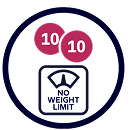
      • No weight-based dosing is required
      • The recommended dose of HYRNUO is 20 mg (two 10 mg tablets) taken orally twice daily with food, for a total daily dose of 40 mg, until disease progression or unacceptable toxicity
        • Swallow tablets whole. Do not cut, crush, or chew tablets
      • Missed dose: Patients must take the missed dose as soon as they remember prior to the next scheduled dose
        • Do not take 2 doses at the same time to make up for the missed dose
      • Vomited dose: If a dose is vomited, do not take an additional dose. Resume dosing at the next scheduled time

      Dose modification options enable treatment adjustments when needed, and can help maintain uninterrupted access to HYRNUO1

      • First recommended dose reduction: 10 mg twice daily
      • Second recommended dose reduction: 10 mg once daily
      • Permanently discontinue HYRNUO in patients who are unable to tolerate 10 mg once daily

      APPROVED IN-OFFICE DISPENSING PHARMACIES CAN REQUEST A PATIENT SUPPORT KIT BY CLICKING BELOW TO VISIT THE REQUEST A SPECIALIST PAGE.

      Request a Specialist

      BAYER OFFERS ACCESS SUPPORT FOR YOUR HYRNUO PATIENTS

      Once you've made the decision to prescribe HYRNUO, you can do so through our dedicated specialty pharmacy, Onco360TM. Onco360TM provides oncology-focused care to your patients.

      Icon of 3 patients, one in purple and two in navy blue

      FOR ALL PATIENTS

      All patients NEW to HYRNUO are eligible for a 1-month free trial to help them start HYRNUO at no cost*

      • One-month supply of HYRNUO allows HCPs and patients to determine if it is the right treatment option at no cost to payer or patient. Enroll through a Bayer-contracted specialty pharmacy
      Insurance card icon for copay program

      FOR PATIENTS WITH COMMERCIAL INSURANCE

      Co-pay program

      Eligible patients may pay as little as $0 for HYRNUO

      • Eligible patients will automatically be re-enrolled every January
      • Benefit limits apply
      Enroll your patient
      Hand holding heart with cross sign icon

      FOR PATIENTS WITH MEDICARE

      Patients may qualify for help to pay for out-of-pocket costs for HYRNUO

      • Ask patients with limited income and resources to check their eligibility for government-funded programs, such as Medicare Part D Extra Help, etc, at www.medicare.gov/basics/costs
      • Patients can opt in to the Medicare Prescription Payment Plan to help manage out-of-pocket drug costs by spreading them out over the year

      *Participation in the HYRNUO Free Trial Program is limited to 1 time only per product (patients currently using HYRNUO are not eligible for a Free Trial of their current product). The Free Trial Program includes 1 month supply. The Free Trial Program for HYRNUO is available to patients 18 years of age and older. Bayer reserves the right to rescind, revoke, or amend this offer without notice at any time.

      Patients are eligible if they are commercially insured and may pay as little as $0 per month. Benefit limitations apply. Patients who are enrolled in any type of government insurance or reimbursement programs are not eligible. As a condition precedent of the co-payment support provided under this program, eg, Co-Pay refunds, participating patients and pharmacies are obligated to inform insurance companies and third-party payers of any benefits they receive and the value of this program, and may not participate if this program is prohibited by or conflicts with their private insurance policy, as required by contract or otherwise. Void where prohibited by law, taxed, or restricted. Patients enrolled in the Bayer US Patient Assistance Foundation are not eligible. Bayer may determine eligibility, monitor participation, equitably distribute product and modify or discontinue any aspect of the HYRNUO $0 Co-Pay Program at any time, including but not limited to this commercial Co-Pay assistance program.

      Bayer US patient assistance foundation logo

      IF YOUR PATIENTS CANNOT AFFORD THEIR PRESCRIPTION MEDICATION, BAYER MAY BE ABLE TO HELP

      The Bayer US Patient Assistance Foundation is a charitable organization that helps eligible patients get their Bayer prescription medicine at no cost. Please have your patient contact the program at 1-866-2BUSPAF (228-7723) Monday–Friday, 9:00 AM–6:00 PM EST, or visit the foundation website at www.patientassistance.bayer.us to see if they might qualify for assistance.

        ADC=antibody-drug conjugate; ALT=alanine aminotransferase; AST=aspartate aminotransferase; BICR=blinded independent central review; BID=twice a day; Cl=confidence interval; CNS=central nervous system; CR=complete response; ECOG PS=Eastern Cooperative Oncology Group performance status; HER2=human epidermal growth factor receptor 2; ILD=interstitial lung disease; NE=not estimable; PR=partial response; QT=represents the duration of time taken from the onset of ventricular depolarization to the end of ventricular repolarization; RECIST=Response Evaluation Criteria in Solid Tumors.

        1. HYRNUO (sevabertinib). Prescribing Information. 2025.

        2. ClinicalTrials.gov. NCT05099172. Available at: https://clinicaltrials.gov/study/NCT05099172. Accessed October 13, 2025.

        3. Yin X, et al. Clin Transl Sci. 2021;14(3):919-933.